
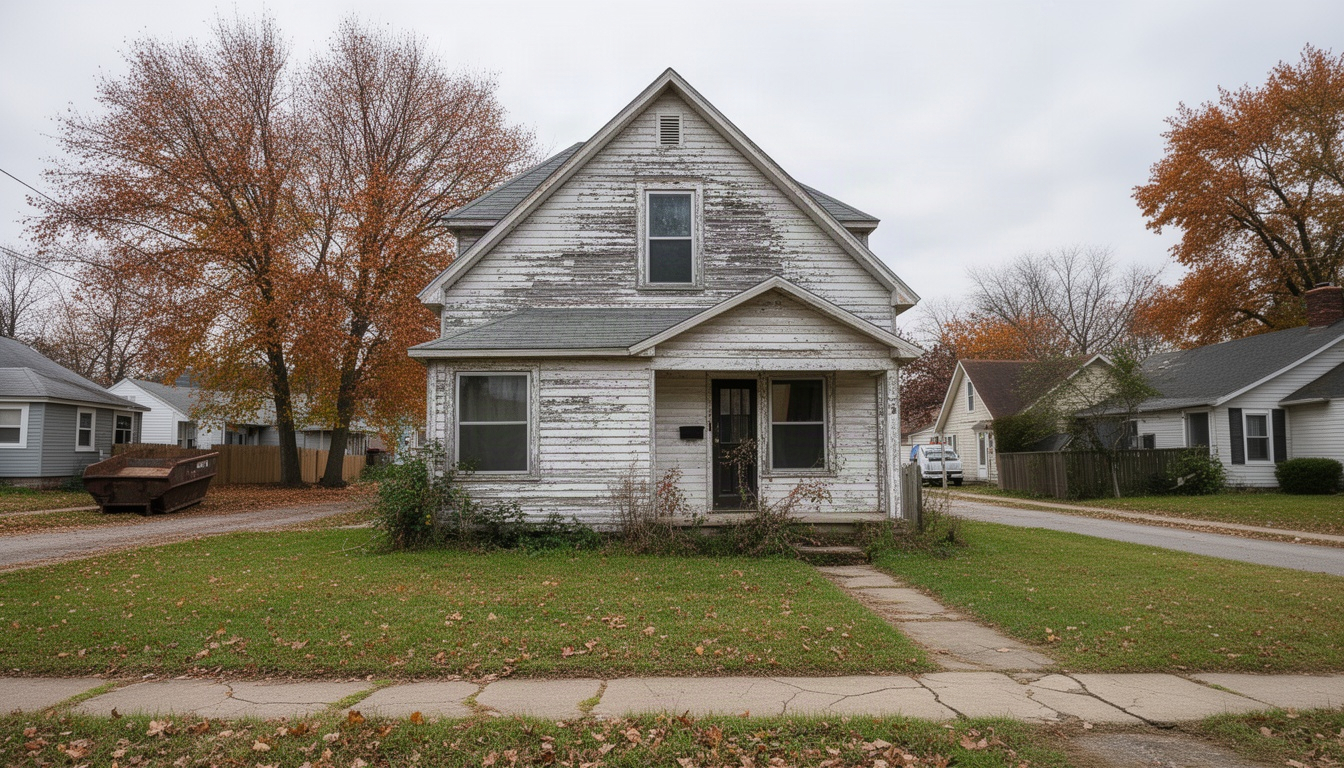
As Is Property Purchases in Hamilton, OH: Millennium Cash Buyers serves Hamilton and the surrounding area. Visit millenniumcashbuyers.com for a free quote.
In This Article
- TL;DR
- What Does "As-Is" Mean in a Hamilton Property Sale?
- Who Buys As-Is Properties in Hamilton, OH?
- What Are the Real Costs of Selling As-Is in Hamilton?
- How Does the As-Is Purchase Process Work in Hamilton?
- What Are the Risks of As-Is Transactions for Buyers and Sellers?
- Is Selling As-Is in Hamilton the Right Move for You?
- Finding Cash Buyers for As-Is Properties in Hamilton
- FAQ: As-Is Property Purchases in Hamilton
- Next Steps: Sell Your Hamilton Home As-Is
TL;DR
As-is property purchases in Hamilton, OH mean selling or buying a home without repairs - the buyer accepts the property in its current condition. Ohio law still requires sellers to disclose known defects on the Residential Property Disclosure Form, even in as-is sales. Learn more about sell your house for cash in Hamilton. Cash investors typically offer 60–75% of the property's after-repair value (ARV). As-is sales close faster (7–21 days) than traditional financed sales (45–90 days), but the buyer pool is smaller because most lenders won't finance homes with major defects.
What Does "As-Is" Mean in a Hamilton Property Sale?
"As-is" means the seller is not making repairs before closing. (Hud.gov) (Ohio.gov) The buyer accepts the property in whatever condition it's in on the day of purchase - foundation cracks, outdated HVAC, roof leaks, and all.
Here in Hamilton, as-is sales are common because our housing stock skews older. Many homes were built before 1970, and deferred maintenance is a real factor. When a homeowner inherits a property, faces relocation urgency, or simply can't afford $15,000–$30,000 in repairs, selling as-is becomes the practical choice.
The critical distinction: As-is does NOT mean "no disclosure." Ohio Revised Code § 5302.30 requires sellers to complete a Residential Property Disclosure Form and disclose all known material defects - structural issues, roof condition, HVAC status, plumbing, electrical systems, and water intrusion - regardless of whether the sale is as-is. Sellers who actively conceal defects or misrepresent the property remain liable even after closing. The as-is clause protects the buyer from unknown defects, not the seller from disclosure obligations.
Most as-is buyers in Hamilton are cash investors or fix-and-flip operators. They're equipped to handle repairs and price the property accordingly. Traditional owner-occupants buying with financing rarely purchase as-is homes because lenders won't approve mortgages on properties that fail minimum habitability standards.
Who Buys As-Is Properties in Hamilton, OH?
Three main buyer categories operate in the Hamilton market:
1. Cash Investors & Fix-and-Flip Buyers These are the primary as-is purchasers. They buy at 60–75% of ARV, factor in repair costs and holding expenses, and resell or rent the property. They move fast, close without contingencies, and don't need lender approval. For a $140,000 ARV home in Hamilton, expect offers in the $84,000–$105,000 range before closing costs. Private real estate investments like these can provide potentially higher risk-adjusted returns for investors, which is precisely why cash buyers price their offers to include a meaningful margin.
2. Owner-Occupants with Cash Some local homebuyers have cash reserves and the skills (or contractor relationships) to handle renovations themselves. They're less common in as-is deals but do exist, especially in neighborhoods like Fordson Heights or River View where older homes are plentiful and renovation potential is high.
3. Institutional Buyers & REITs Larger real estate firms occasionally purchase as-is portfolios for rental conversion or long-term hold strategies. They're rare in single-property Hamilton transactions but worth knowing about.
| Buyer Type | Typical Offer Range | Timeline | Contingencies | Best For |
|---|---|---|---|---|
| Cash Investor | 60–75% ARV | 7–14 days | None | Sellers needing speed; distressed properties |
| Owner-Occupant (Cash) | 75–85% ARV | 14–21 days | Inspection only | Sellers wanting owner-occupancy; moderate rehab |
| Financed Buyer | 85–95% ARV | 45–90 days | Appraisal, inspection, financing | Sellers wanting market price; move-in ready homes |
The catch: Financed buyers rarely touch as-is properties. FHA and conventional lenders require homes to meet minimum property standards - missing HVAC, structural damage, code violations, and health hazards are automatic disqualifiers. That's why the buyer pool for as-is homes shrinks dramatically. You're competing for cash buyers, not the broader market.
What Are the Real Costs of Selling As-Is in Hamilton?
The financial math on as-is sales is straightforward but counterintuitive. Most sellers assume they'll net more by avoiding repairs. Often, they don't.
Example: $140,000 ARV Home in Hamilton
| Cost Category | Traditional Sale | As-Is Sale |
|---|---|---|
| Repairs avoided | $0 | $18,000 |
| Accepted price reduction | $0 | $21,000–$28,000 (60–75% ARV) |
| Ohio conveyance fee ($1.50/$1,000) | $210 | $180 |
| Title insurance & closing | $500–$800 | $400–$600 |
| Agent commission (if used) | $8,400–$10,500 (6%) | $0 (cash buyer, no agent) |
| Net proceeds to seller | ~$120,000–$130,000 | ~$92,000–$105,000 |
The reality: Selling as-is typically nets $3,000–$10,000 LESS than a traditional sale, even after accounting for repair costs. The price reduction exceeds the repair savings because investors demand a margin for their risk and effort.
However, as-is sales make financial sense in specific scenarios:
- Inherited property you don't want to manage: Avoid carrying costs, property taxes, and insurance while repairs happen.
- Severe structural issues: Foundation cracks, roof collapse, or major water damage can cost $20,000–$50,000+ to fix. Selling as-is to a cash buyer may be the only viable path.
- Urgent relocation: If you're relocating for a job and can't wait 60–90 days for a traditional sale, the speed premium justifies the lower price.
Ohio-specific closing costs:
- Conveyance fee: $1.50 per $1,000 of sale price (state $1 + Butler County supplemental $0.50)
- Title insurance (owner's policy): $300–$500 for a $140,000 home
- Prorated property taxes: Varies by closing date
- Recording fees: $50–$100
Sellers using an agent on a traditional sale pay 5–6% commission; as-is cash sales eliminate this entirely, which is one genuine advantage.
How Does the As-Is Purchase Process Work in Hamilton?
Here's what actually happens when you sell as-is in our community:
Step 1: List or Contact a Cash Buyer You can list the property on the MLS as "as-is" or contact local cash buyers directly. In Hamilton, providers like Millennium Cash Buyers specialize in as-is purchases and can provide a no-obligation offer within 24–48 hours. No repairs, no inspections, no contingencies - just a straightforward cash offer.
Step 2: Receive an Offer The buyer (or their agent) inspects the property, estimates repair costs, and submits an offer. Expect 50–75% of ARV. You're free to negotiate, but remember: the buyer has already factored in their profit margin and holding costs.
Step 3: Complete the Ohio Residential Property Disclosure Form This is non-negotiable. You must disclose all known material defects - roof condition, HVAC status, plumbing issues, electrical problems, water intrusion, structural concerns, and any past flooding or foundation work. Incomplete or false disclosures can result in post-closing liability.
Step 4: Title Search & Clear Any Liens The title company searches for liens, judgments, back taxes, or other encumbrances. If you have a mortgage, the lender must be paid off at closing. If there are judgment liens or tax liens, they must be resolved before the sale closes.
Step 5: Schedule Closing As-is cash sales typically close in 7–21 days. No appraisal contingency, no financing contingency - just title clearance and final walkthrough. Traditional financed sales take 45–90 days because of appraisal, underwriting, and inspection timelines.
Step 6: Close and Transfer Funds The title company coordinates the closing. You sign the deed, the buyer wires funds, and the property transfers. You receive your net proceeds (sale price minus closing costs and any liens).
Timeline Comparison:
- As-is cash sale: 7–21 days from offer to close
- Traditional financed sale: 45–90 days from offer to close
The speed advantage is real, especially if you're facing foreclosure, probate deadlines, or relocation pressure.
What Are the Risks of As-Is Transactions for Buyers and Sellers?
As-is sales move fast, but they carry distinct risks for both parties.
Seller Risks:
- Underpricing: You may accept an offer that's lower than the market would bear if you waited for a traditional buyer. The 60–75% ARV rule is a ceiling, not a floor - competitive markets may yield higher offers.
- Limited buyer pool: As-is homes attract only cash buyers and investors. You're not competing for owner-occupants with financing, which shrinks demand and negotiating power.
- Financing complications for the buyer: If the buyer can't close (rare with cash, but possible if they're using a hard-money lender), the deal falls through and you're back to square one.
- Disclosure liability: Ohio law holds sellers accountable for fraudulent concealment. If you knowingly hide a major defect and the buyer discovers it post-closing, you can be sued for damages. "As-is" does not shield you from this.
Buyer Risks:
- Hidden structural issues: You may discover foundation problems, mold, or electrical hazards during renovation that weren't apparent during the walkthrough. Repair costs can balloon 20–50% beyond estimates.
- Title problems: Liens, judgment claims, or ownership disputes can delay or derail closing. A thorough title search is essential.
- Appraisal gaps: If you're using an FHA 203(k) loan to finance repairs, the property must appraise at a certain value. Severe defects can cause the appraisal to come in low, killing the deal.
- Renovation cost overruns: Contractors often discover additional problems once work begins - hidden plumbing, electrical code violations, asbestos, lead paint. Budget 10–20% contingency on top of estimates.
Risk mitigation:
- Sellers: Disclose everything you know. Consult an Ohio real estate attorney before closing if you're unsure what qualifies as a "material defect."
- Buyers: Get a professional inspection even in as-is deals. It's not a contingency, but it informs your offer and renovation budget. Due diligence is a buyer's responsibility to thoroughly research a property's suitability and value before finalizing the purchase - a step that's just as important in as-is transactions as in any other. Use licensed contractors with references.
Is Selling As-Is in Hamilton the Right Move for You?
Not every Hamilton homeowner should sell as-is. Here's a decision framework:
Sell as-is if:
- You're facing foreclosure or probate deadlines and need to close within 30 days.
- Repairs exceed $15,000 and you lack the cash or credit to finance them.
- The property has severe structural issues (foundation, roof, major water damage) that would require $30,000+ in repairs.
- You're relocating and can't manage the property remotely during a traditional sale.
Sell traditionally if:
- The property is in decent condition (cosmetic issues only, systems functional).
- You can afford $5,000–$15,000 in repairs and have 60–90 days to wait.
- You want to maximize net proceeds - traditional sales typically yield 10–20% more than as-is deals.
- You're in a strong seller's market (low inventory, high demand).
Decision Checklist:
- Do you need to close within 30 days? (Yes = as-is favors you)
- Are repairs estimated above $15,000? (Yes = as-is may make sense)
- Can you afford repairs or carry the property while it sells? (No = as-is is practical)
- Is the property in a desirable neighborhood with strong demand? (Yes = traditional sale likely nets more)
- Are you comfortable with a smaller buyer pool and lower offers? (No = list traditionally)
If you answer "yes" to questions 1–3 and "no" to 4–5, as-is is probably your best path. If you answer "yes" to 4 and "yes" to 5, a traditional listing will likely serve you better.
Finding Cash Buyers for As-Is Properties in Hamilton
Here in Hamilton, the as-is market is active. Cash buyers and fix-and-flip investors are actively purchasing properties in neighborhoods like Lindenwald, East Hamilton, and South Hamilton where older homes and renovation potential align. Effective real estate investment relies on both modern analytics and practical industry knowledge - the same combination that experienced local cash buyers use to evaluate as-is properties quickly and make competitive offers.
Where to find buyers:
- Direct outreach: Search "cash home buyers Hamilton Ohio" or "we buy houses Hamilton" online. Most cash buyers have websites with offer forms.
- Real estate agents: Local agents who specialize in investor sales can connect you with cash buyers they work with regularly.
- Networking: Ask your realtor, attorney, or accountant for referrals. Word-of-mouth is common in the local investor community.
- Online platforms: Some national cash-buying platforms (like Millennium Cash Buyers) operate in Hamilton and can provide offers within 24–48 hours.
What to expect from a reputable cash buyer:
- No-obligation offer within 24–48 hours
- Clear explanation of the offer (ARV estimate, repair costs, their margin)
- Transparent closing costs
- No pressure to accept immediately
- Willingness to answer questions about the process
Avoid buyers who:
- Pressure you to sign immediately
- Won't explain their offer calculation
- Demand upfront fees
- Refuse to provide references
FAQ: As-Is Property Purchases in Hamilton
Do sellers in Hamilton still have to disclose defects on an as-is property?
Direct Answer: Yes. Ohio Revised Code § 5302.30 requires sellers to complete a Residential Property Disclosure Form and disclose all known material defects, even on as-is sales. The as-is clause does not waive disclosure obligations.
Sellers who actively conceal defects or misrepresent the property remain liable for damages even after closing. "As-is" protects the buyer from unknown defects, not the seller from disclosure requirements. If you're unsure what qualifies as a material defect, consult an Ohio real estate attorney before closing.
How much less will I get selling my Hamilton home as-is compared to a traditional sale?
Direct Answer: Typically $3,000–$10,000 less, even after accounting for repair costs avoided. As-is sales usually net 60–75% of the property's after-repair value (ARV), while traditional sales net 85–95% of ARV.
On a $140,000 ARV home, you might accept an as-is offer of $84,000–$105,000 versus a traditional sale price of $119,000–$133,000. The price reduction often exceeds repair savings because cash buyers factor in their profit margin, holding costs, and renovation risk.
Can a buyer get a mortgage on an as-is home in Hamilton, Ohio?
Direct Answer: Rarely. FHA and conventional lenders require properties to meet minimum habitability standards. Homes with structural defects, missing HVAC, code violations, or health hazards fail appraisal and are ineligible for standard financing.
The exception is an FHA 203(k) rehabilitation loan, which allows buyers to finance both the purchase and renovation costs in a single mortgage. However, 203(k) loans require a HUD-approved consultant, add complexity, and extend the timeline. Most as-is properties in Hamilton trade to cash buyers because traditional financing is structurally excluded.
How long does an as-is property sale take in Hamilton?
Direct Answer: 7–21 days from offer to closing. As-is cash sales eliminate appraisal, underwriting, and financing contingencies, which are the primary drivers of delay in traditional sales.
Traditional financed sales take 45–90 days. The speed advantage of as-is sales is one genuine benefit, especially if you're facing foreclosure, probate deadlines, or relocation urgency. Title clearance and lien resolution are the main variables affecting timeline.
What types of homes sell as-is most often in Hamilton?
Direct Answer: Older homes with deferred maintenance, inherited properties, and homes with severe structural or system issues. Hamilton's median home was built before 1970, so older housing stock dominates as-is sales.
Common as-is scenarios include properties with foundation cracks, roof leaks, outdated electrical or plumbing, missing HVAC, water intrusion, or code violations. Owner-occupants often lack the capital or expertise to address these issues, making as-is sales the practical choice.
Is it worth fixing up a house before selling in Hamilton or should I sell as-is?
Direct Answer: If repairs are under $10,000 and you have 60+ days, fixing up typically yields more net proceeds. If repairs exceed $15,000 or you need to close within 30 days, selling as-is is usually the better financial move.
The break-even point depends on your timeline, repair costs, and local market conditions. A traditional sale on a well-maintained home nets 10–20% more than an as-is sale, but that advantage disappears if repairs are expensive or you're under time pressure.
How do I find cash buyers for an as-is property in Hamilton, OH?
Direct Answer: Search online for "cash home buyers Hamilton Ohio," ask your real estate agent for referrals, or contact local investors directly. Reputable cash buyers provide no-obligation offers within 24–48 hours and explain their offer calculation clearly.
Providers like Millennium Cash Buyers operate in Hamilton and specialize in as-is purchases. Avoid buyers who pressure you to sign immediately, demand upfront fees, or refuse to explain their offer. Check references and verify they're licensed and insured before committing.
Next Steps: Sell Your Hamilton Home As-Is
If you're considering an as-is sale in Hamilton, the first step is getting a clear offer from a qualified cash buyer. You'll know your actual options - timeline, net proceeds, and process - instead of guessing.
Ready to explore your options? Contact Millennium Cash Buyers for a free, no-obligation offer. They specialize in as-is purchases throughout Hamilton and can provide a concrete number within 24 hours. No repairs required, no commission, no pressure.
Call or visit their website to get started. The process is straightforward, and knowing your options costs nothing.
Ready to Get Started?
For personalized guidance, visit Millennium Cash Buyers to learn how we can help.
Frequently asked questions
What Does "As-Is" Mean in a Hamilton Property Sale?
"As-is" means the seller is not making repairs before closing. (Hud.gov) (Ohio.gov) The buyer accepts the property in whatever condition it's in on the day of purchase - foundation cracks, outdated HVAC, roof leaks, and all.
Who Buys As-Is Properties in Hamilton, OH?
Three main buyer categories operate in the Hamilton market:
What Are the Real Costs of Selling As-Is in Hamilton?
The financial math on as-is sales is straightforward but counterintuitive. Most sellers assume they'll net more by avoiding repairs. Often, they don't.
How Does the As-Is Purchase Process Work in Hamilton?
Here's what actually happens when you sell as-is in our community:
What Are the Risks of As-Is Transactions for Buyers and Sellers?
As-is sales move fast, but they carry distinct risks for both parties.
Is Selling As-Is in Hamilton the Right Move for You?
Not every Hamilton homeowner should sell as-is. Here's a decision framework:
Do sellers in Hamilton still have to disclose defects on an as-is property?
Yes. Ohio Revised Code § 5302.30 requires sellers to complete a Residential Property Disclosure Form and disclose all known material defects, even on as-is sales. The as-is clause does not waive disclosure obligations.
How much less will I get selling my Hamilton home as-is compared to a traditional sale?
Typically $3,000–$10,000 less, even after accounting for repair costs avoided. As-is sales usually net 60–75% of the property's after-repair value (ARV), while traditional sales net 85–95% of ARV.
Can a buyer get a mortgage on an as-is home in Hamilton, Ohio?
Rarely. FHA and conventional lenders require properties to meet minimum habitability standards. Homes with structural defects, missing HVAC, code violations, or health hazards fail appraisal and are ineligible for standard financing.
How long does an as-is property sale take in Hamilton?
7–21 days from offer to closing. As-is cash sales eliminate appraisal, underwriting, and financing contingencies, which are the primary drivers of delay in traditional sales.