
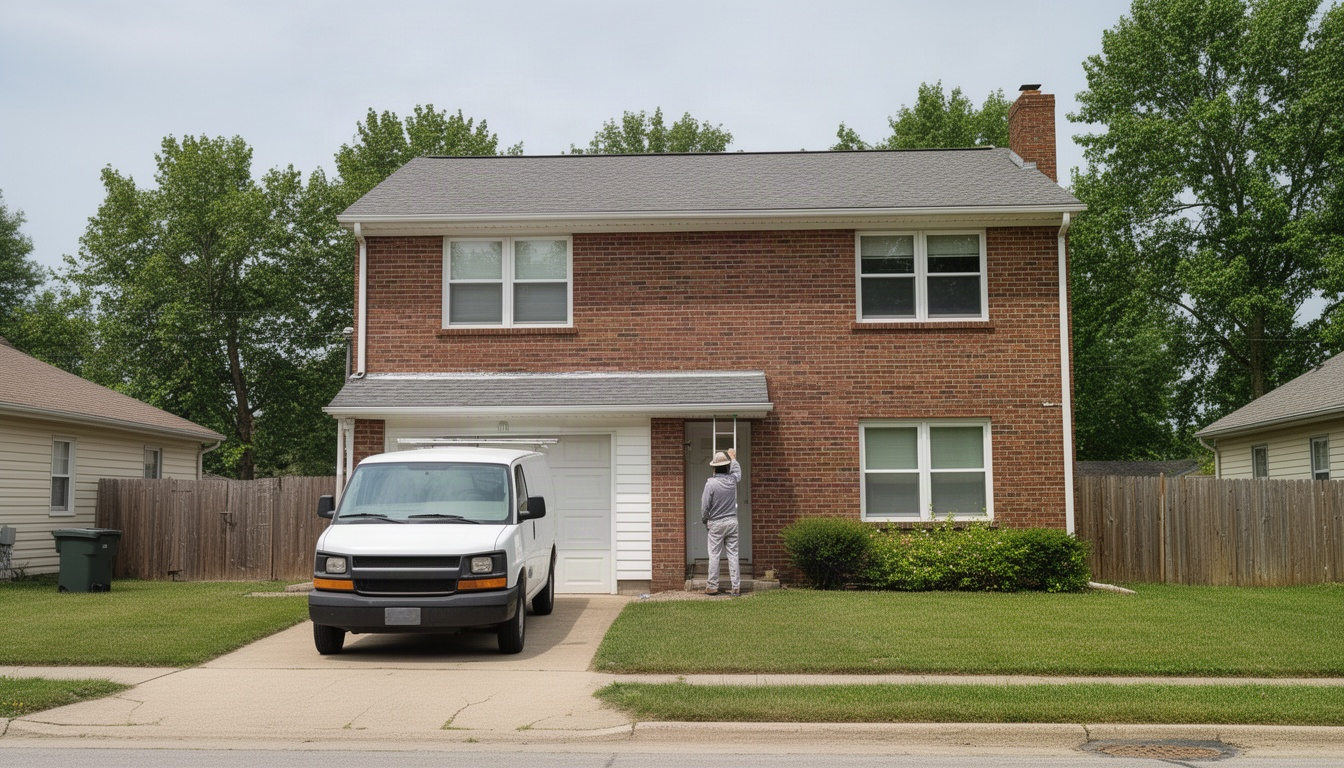
Rental Property Investors in Hamilton, OH: Millennium Cash Buyers serves Hamilton and the surrounding area. Visit millenniumcashbuyers.com for a free quote.
TL;DR: Hamilton, Ohio offers rental property investors median home prices around $130,000–$160,000 with achievable 1% rent-to-price ratios, making it substantially more accessible than Cincinnati suburbs. The market is anchored by stable employment (Mercy Health, Cleveland-Cliffs) and supports working-class renters. Neighborhood selection, accurate cash flow modeling, and understanding Butler County property taxes are critical to success.
In This Article
- Why Hamilton, Ohio Attracts Rental Property Investors
- What Does the Hamilton, Ohio Rental Market Look Like in 2026?
- Which Hamilton Neighborhoods Work Best for Rentals?
- How Do You Calculate Cash Flow on a Hamilton Rental Property?
- How to Buy Rental Properties in Hamilton, Ohio: Step-by-Step
- When Should a Hamilton Rental Investor Sell Instead of Hold?
- Frequently Asked Questions: Hamilton Ohio Rental Investing
- Taking Action: Your Next Steps
Why Hamilton, Ohio Attracts Rental Property Investors
Here in Hamilton, we're seeing rental property investors discover what local real estate professionals have known for years: this market delivers entry-level acquisition prices that simply don't exist in nearby Cincinnati suburbs. The median home price in Hamilton hovers around $147,000, compared to $250,000–$310,000 in Fairfield Township and Mason just 20 miles north. That price differential - roughly 50–70% lower - fundamentally changes the math for cash flow investors.
Hamilton's population of approximately 62,000 includes roughly 45% renter-occupied housing units, according to Census data. That's a substantial renter base in a city of manageable size. The employment landscape here is stable: Mercy Health operates Fort Hamilton Hospital, Cleveland-Cliffs runs a major manufacturing facility, and the I-75 corridor supports logistics and distribution operations that employ hundreds of working-class residents who form the backbone of the rental market.
What makes Hamilton particularly attractive is the rent-to-price ratio. A property purchased at $95,000 and renting at $1,000 per month yields a 1.05% ratio - passing the investor's 1% rule benchmark. In Cincinnati suburbs, you'd pay double the acquisition price for similar rent potential. For investors evaluating multiple Ohio markets, Hamilton's affordability combined with stable employment-driven demand creates a compelling case. If you're considering an exit strategy or need to liquidate a rental quickly, local cash buyers like Millennium Cash Buyers understand the Hamilton market dynamics and can facilitate off-market transactions without the traditional listing timeline.
What Does the Hamilton, Ohio Rental Market Look Like in 2026?
The rental market in Hamilton reflects steady, working-class demand. Current data shows average rents of approximately $825 for a 1-bedroom, $1,025 for a 2-bedroom, and $1,200 for a 3-bedroom unit. These figures support the affordability thesis: a $90,000 property renting at $1,050 per month passes basic investor screening.
Vacancy rates in Hamilton track around 8–9%, based on Census estimates for Butler County. (Butler.gov) (Census.gov) That's slightly elevated compared to national averages but typical for secondary Midwest markets. The vacancy reflects both seasonal churn and structural factors - older housing stock, some deferred maintenance in certain neighborhoods, and the natural turnover of working-class rentals. For investors, this means realistic expectations: plan for 8% vacancy in your underwriting, not 5%.
Rent growth has been modest but consistent. Year-over-year rent increases in Hamilton and comparable Midwest secondary markets averaged 3–5% in 2024–2025. That's slower than coastal markets but faster than stagnation - meaningful for long-term cash flow projections. The growth is driven by stable employment and limited new construction, not speculative demand.
Butler County's property tax environment is a critical underwriting input. Effective tax rates range from 1.7% to 2.1% of assessed value depending on the school district. Hamilton City School District sits at the higher end of that range (~2.0%). On a $90,000 property, expect annual taxes around $945–$1,100. This is substantially higher than some Midwest markets and must be factored into every cash flow model.
Which Hamilton Neighborhoods Work Best for Rentals?
Neighborhood selection in Hamilton determines both entry price and tenant profile. Here's the hyper-local breakdown that generic Ohio guides skip.
Lindenwald and Northeast Hamilton
Lindenwald and the northeast corridor offer the lowest entry prices: $60,000–$110,000 for single-family rentals. These neighborhoods attract workforce tenants - manufacturing workers, service industry employees, and families on fixed incomes. Rents typically run $800–$950 for a 2-bedroom. The trade-off is clear: lower acquisition cost, lower rent, and typically higher tenant turnover and maintenance demands. Properties here often require cosmetic or structural rehab. For investors comfortable with value-add plays or seeking maximum cash-on-cash returns on small down payments, Lindenwald is the entry point.
Downtown Hamilton and Rehabbed Districts
Downtown Hamilton and adjacent rehabbed areas (German Village Historic District, Rossville Historic District) represent the appreciation play. Properties here price $110,000–$180,000 and attract younger renters, professionals, and families drawn to the downtown revitalization. Rents run $1,050–$1,300 for 2–3 bedroom units. The Spooky Nook Sports Champion Mill, which opened in 2022 as the largest indoor sports complex in the United States, has catalyzed downtown investment and visitor traffic. This creates both short-term rental opportunity and long-term neighborhood appreciation potential. The downside: higher acquisition cost and lower initial cash-on-cash returns, but stronger appreciation trajectory.
Fairfield Township Border Areas
Properties near the Fairfield Township border (zip codes 45014, 45015) command higher rents - $1,100–$1,400 for 3-bedroom homes - due to proximity to Fairfield City Schools, which rank higher than Hamilton schools. These neighborhoods attract families prioritizing education and tend to have lower tenant volatility. Acquisition prices run $140,000–$220,000. The rent-to-price ratio is tighter here (closer to 0.7–0.8%), making these neighborhoods better for appreciation and stability than aggressive cash flow. Investors seeking lower turnover and professional tenants gravitate here; cash flow-focused investors typically avoid this tier.
How Do You Calculate Cash Flow on a Hamilton Rental Property?
This is where theory meets reality. Let's walk through a transparent underwriting model using a real 2026 Hamilton scenario.
The Property: $90,000 purchase price, $1,050/month rent, 25% down payment ($22,500), 75% financed at 7.5% over 30 years.
Gross Annual Rent: $1,050 × 12 = $12,600
Expense Breakdown (Annual):
- Vacancy loss (8%): –$1,008
- Property management (10% of rent): –$1,260
- Property taxes (Hamilton City School District): –$945
- Homeowners insurance: –$800
- Maintenance reserve (10% of rent): –$1,200
- Mortgage payment (P&I): –$5,200
Total Annual Expenses: $10,413
Net Operating Income (NOI): $12,600 – $10,413 = $2,187
Cash-on-Cash Return: $2,187 ÷ $22,500 down = 9.7%
This model assumes no major repairs, no capital expenditures, and stable occupancy. In practice, older Hamilton properties often require additional maintenance reserves. The 1% rule ($1,050 rent ÷ $90,000 price) is a screening heuristic, not a guarantee - full expense modeling is mandatory.
Cap Rate Calculation: NOI ($2,187) ÷ Purchase Price ($90,000) = 2.4% cap rate. This is low, reflecting the low acquisition price and modest rent. Cap rates in Hamilton typically range 3–6% depending on neighborhood and property condition. Lower cap rates signal appreciation potential; higher cap rates signal cash flow focus.
Break-Even Rent: To cover expenses without cash flow, this property needs approximately $867/month. The $1,050 actual rent provides a 21% cushion above break-even - a reasonable safety margin for a working-class rental.
How to Buy Rental Properties in Hamilton, Ohio: Step-by-Step
Financing Options
Conventional Mortgages: Traditional 30-year fixed loans require 20–25% down and full income documentation. Most lenders impose minimum loan amounts of $60,000–$75,000, creating a gap for Hamilton properties priced under $75,000. If you're buying a $60,000 property, conventional financing may not be available.
DSCR Loans: Debt Service Coverage Ratio loans qualify based on property income, not borrower income - ideal for investors who don't want to document personal W-2s. DSCR lenders typically require minimum loan amounts of $75,000–$100,000 and charge 7–9% interest with 1–2 points. For Hamilton rentals, DSCR loans bridge the gap between conventional minimums and cash purchase.
Hard Money: Private lenders in Ohio charge 10–14% interest with 2–4 points on 6–18 month terms. Hard money is expensive but fast - useful for fix-and-flip or acquisition bridge financing before refinancing into a portfolio loan. For a $90,000 acquisition, hard money costs roughly $1,800–$3,600 in points alone.
Cash Purchase: For properties under $75,000 or in poor condition, cash is often the only viable option. Cash also eliminates appraisal contingencies and speeds closing. If you're holding multiple rentals and have capital, cash purchases in Hamilton can close in 7–10 days.
Finding Deals
MLS: The traditional route. Most Hamilton rentals are listed on the MLS through local agents. Expect to pay 5–6% in agent commissions.
Wholesalers: Local wholesalers source off-market deals and assign contracts to investors. Wholesaler fees typically run $5,000–$15,000 per deal. Quality varies; vet wholesalers carefully.
Auctions: Butler County Sheriff's Office and tax foreclosure auctions offer distressed properties. Auction properties are sold as-is, often with tenants in place. Closing is typically 30 days post-sale.
Direct-to-Seller: Motivated sellers - landlords exiting the market, inherited properties, distressed situations - often sell off-market. Platforms like Millennium Cash Buyers connect investors with sellers seeking quick, hassle-free transactions. Cash buyers understand tenant-occupied properties and can close without traditional financing delays.
Due Diligence Checklist
- Inspection: Professional home inspection is non-negotiable. Budget $300–$500. Focus on roof, HVAC, foundation, and plumbing - the big-ticket items.
- Title Search: Verify clear title and check for liens, easements, or code violations. Title insurance costs $400–$600.
- Tenant Leases: If buying tenant-occupied, review existing leases. Understand lease terms, rent amounts, and tenant quality. Ohio law requires new owners to honor existing leases.
- Deferred Maintenance: Estimate repair costs realistically. Many Hamilton properties are 60+ years old; budget accordingly.
- Property Taxes: Verify current tax assessment and millage rates with the Butler County Auditor. Tax increases can erode cash flow.
- Zoning & Code Compliance: Confirm the property is zoned for rental use and complies with local housing codes.
Closing Timeline and Costs
Conventional financing typically closes in 30–45 days. Cash or hard money closes in 7–14 days. Butler County deed transfer tax (conveyance fee) is $4.00 per $1,000 of sale price - on a $90,000 purchase, that's $360. Title insurance, recording fees, and attorney fees add another $600–$1,000. Total closing costs typically run 2–3% of purchase price.
When Should a Hamilton Rental Investor Sell Instead of Hold?
Not every rental deserves to be held forever. Exit strategy is as important as acquisition strategy.
Signs It's Time to Sell:
- Negative Cash Flow: If expenses exceed rent and the property is underwater, holding becomes a liability. Repair costs, tax increases, or tenant issues can flip a marginal rental into a money pit.
- Deferred Maintenance: If major systems (roof, HVAC, foundation) need replacement and the rent doesn't justify the capital outlay, sell before the property deteriorates further.
- Neighborhood Decline: If local employment anchors close or the neighborhood shows signs of sustained decline, appreciation upside disappears. Sell while the property still has value.
- Opportunity Cost: If capital is tied up in a 2% cap rate property and you can deploy it at 5–6% elsewhere, the math favors selling.
Exit Strategies:
1031 Exchange: Defer capital gains by exchanging into another like-kind property within 45 days of identification and 180 days of closing. This is powerful for consolidating multiple small rentals into a larger property or moving to a higher-cap-rate market.
Cash Sale: If a property is tenant-occupied, in poor condition, or you need liquidity quickly, a cash buyer can close without appraisal contingencies or financing delays. Millennium Cash Buyers specializes in tenant-occupied and distressed rentals in Hamilton, offering a streamlined alternative to traditional listing. The trade-off is typically a 5–10% discount to market value, but you avoid 6 months of carrying costs and agent commissions.
Retail Sale: List on the MLS and work with an agent. This takes 60–90 days but typically yields the highest price. Use this approach if the property is in good condition and the market is stable.
Frequently Asked Questions: Hamilton Ohio Rental Investing
Is Hamilton, Ohio a good place to invest in rental properties?
Direct Answer: Yes, Hamilton is a solid secondary market for rental investors seeking affordable entry prices and stable working-class renter demand, though cash flow margins are modest and neighborhood selection is critical.
Hamilton's $130,000–$160,000 median home price creates accessibility that Cincinnati suburbs don't offer. Stable employment (Mercy Health, Cleveland-Cliffs) and a 45% renter-occupied housing base support consistent demand. The downside: rent-to-price ratios are tight (typically 0.8–1.1%), meaning cash flow is modest unless you buy significantly below market or execute value-add rehab. For investors seeking appreciation or long-term wealth building, Hamilton works. For aggressive cash flow plays, you may find better returns in lower-cost markets like Middletown or Dayton.
What is the average rent for a single-family home in Hamilton, Ohio?
Direct Answer: Average rents in Hamilton are approximately $825 for a 1-bedroom, $1,025 for a 2-bedroom, and $1,200 for a 3-bedroom.
These figures support the 1% rule on properties priced under $110,000. Rents vary by neighborhood: Lindenwald and northeast Hamilton run $750–$950; downtown and rehabbed areas run $1,050–$1,300; Fairfield Township border areas run $1,100–$1,400. Rent growth has averaged 3–5% year-over-year, in line with Midwest secondary market trends.
How does Hamilton compare to Middletown, Ohio for real estate investing?
Direct Answer: Hamilton and Middletown are both Butler County markets with similar price points and employment bases, but Hamilton offers slightly lower entry prices and more neighborhood diversity, while Middletown has stronger industrial employment and slightly higher rents.
Both markets support 1% rule rentals. Hamilton median prices are $130,000–$160,000; Middletown is $120,000–$150,000. Hamilton has more downtown revitalization activity (Spooky Nook Sports, riverfront investment); Middletown has stronger manufacturing employment. For investors, the choice depends on neighborhood preference and whether you prioritize cash flow (Middletown) or appreciation (Hamilton downtown). Both are viable; neither is objectively "better."
What financing options work best for buying rentals in Hamilton, Ohio?
Direct Answer: DSCR loans and cash purchases are most practical for Hamilton rentals under $100,000; conventional mortgages work for properties above $75,000 if you have strong income documentation.
Conventional loans require 20–25% down and minimum loan amounts of $60,000–$75,000, creating a financing gap for many Hamilton properties. DSCR loans qualify on property income (not personal income) and work well for investors with multiple rentals. Hard money is expensive (10–14% interest) but fast, useful for bridge financing. For properties under $75,000, cash is often the only viable option. Portfolio lenders (local banks holding loans in-house) sometimes offer lower minimums than conventional lenders - worth exploring with community banks in Butler County.
What are the biggest risks of investing in Hamilton rental properties?
Direct Answer: Tight cash flow margins, older housing stock requiring maintenance, modest rent growth, and neighborhood-dependent tenant quality are the primary risks.
Hamilton's low entry prices come with trade-offs. Properties are typically 60+ years old; expect higher maintenance costs and capital expenditures. Rent-to-price ratios are tight, meaning a 10% rent decrease or 20% expense increase can flip a property to negative cash flow. Neighborhood selection is critical - Lindenwald offers lower prices but higher tenant turnover; downtown offers appreciation but lower initial returns. Vacancy risk is real; plan for 8% vacancy, not 5%. Finally, property tax increases (Butler County has raised millage rates in recent years) can erode cash flow projections.
Can I sell a tenant-occupied rental property quickly in Hamilton?
Direct Answer: Yes. Cash buyers can close tenant-occupied rentals in 7–14 days without appraisal contingencies or financing delays, though you'll typically accept a 5–10% discount to market value.
Traditional MLS sales of tenant-occupied properties take 60–90 days and require buyer financing contingencies. Cash buyers like Millennium Cash Buyers specialize in tenant-occupied and distressed rentals, offering speed and certainty. The trade-off is price: expect 5–10% below market value. If you need liquidity or want to avoid months of carrying costs, this is viable. If the property is in good condition and you can wait, a retail MLS sale typically yields higher proceeds.
What property taxes should investors expect in Butler County, Ohio?
Direct Answer: Effective property tax rates in Butler County range from 1.7% to 2.1% of assessed value, with Hamilton City School District at the higher end (~2.0%).
On a $90,000 property in the Hamilton City School District, expect annual taxes around $945–$1,100. This is substantially higher than some Midwest markets and must be factored into every cash flow model. Fairfield Township and Liberty Township have lower rates (~1.7%) due to lower school district levies. Check the Butler County Auditor website for current millage rates by taxing district before underwriting. Tax increases are common; budget conservatively.
Taking Action: Your Next Steps
Investing in Hamilton rental properties requires discipline: accurate neighborhood research, transparent cash flow modeling, and realistic expectations about maintenance and tenant quality. The market rewards investors who do their homework and avoid overpaying for marginal cash flow.
If you're evaluating Hamilton as a rental market and considering an exit strategy - whether you're consolidating properties, dealing with a distressed rental, or simply seeking liquidity - Millennium Cash Buyers offers a streamlined alternative to traditional listing. We understand Hamilton's neighborhoods, tenant dynamics, and the specific challenges of older rental stock. Whether you're buying your first rental or selling a portfolio property, we can help you navigate the local market efficiently.
Start by analyzing 3–5 specific properties in your target neighborhood using the cash flow model outlined above. Run the numbers conservatively: assume 8% vacancy, 10% maintenance reserves, and current tax rates. If a property doesn't pencil at those assumptions, it's not a deal. Once you've identified a strong candidate, get a professional inspection and verify title. The market rewards patience and discipline.
For questions about selling a rental property quickly or exploring cash purchase options in Hamilton, contact our team. We're here to help local investors succeed.
Ready to Get Started?
For personalized guidance, visit Millennium Cash Buyers to learn how we can help.